

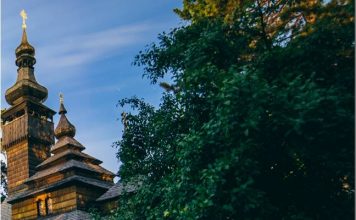

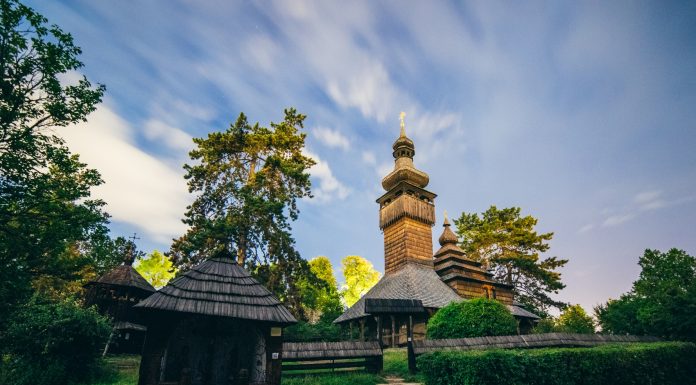
Next to Uzhgorod Castle a Transcarpathian village is on display, unchanged since ancient times. Located under the open sky, The Museum of Folk Architecture and Rural Life welcomes visitors to view architectural monuments of a traditional Transcarpathian village, as well as samples of the oldest and most common types of hand-made folk crafts. Most of the buildings date from...
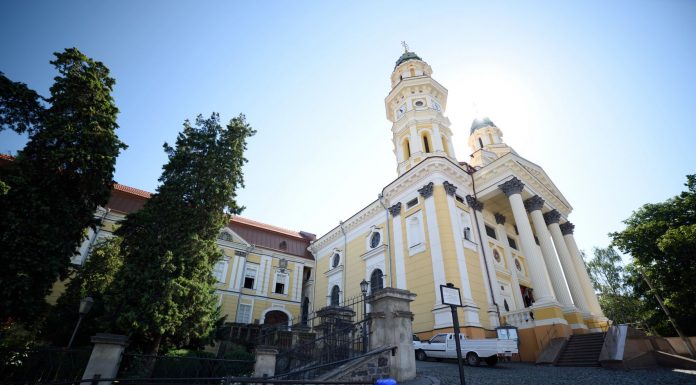
Uzhgorod Holy Cross Greek Catholic Cathedral began to be built in 1640 by Count Janos Drugets. Cathedral served as a temple for the Jesuit monastery that was in the house of the bishop's residence. On April 1, 1770 the general vicar Andrii Bachynskyi (1732-1809) on an audience with the Empress Maria Theresa succeeded independence for Mukachevo Eparchy. In 1773...
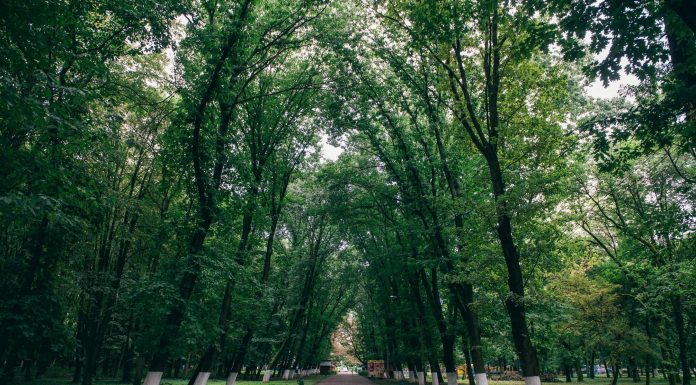
Bozdosh Park was first opened in 1954. In 1984, the Transcarpathian Executive Committee issued a decree to create a landscaped park of local significance within the boundaries of Uzhgorod, to be located on Bozdosh Street. The total area of the park is 50 hectares and today it is part of Ukraine’s natural reserve system. The park is also a...
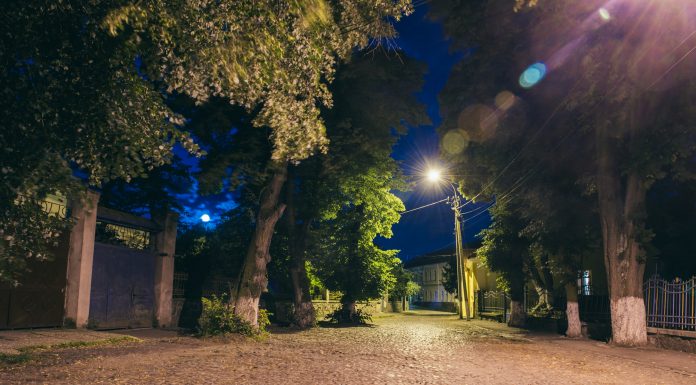
It is the oldest street of Uzhgorod. It was the only street located within the outer fortifications of the castle. In the 17th century it consisted of about 10 households. In the early 19th century the name “Kapitulna” was gradually assigned to the street because of Capitol which was located at the beginning of the street, near houses where...
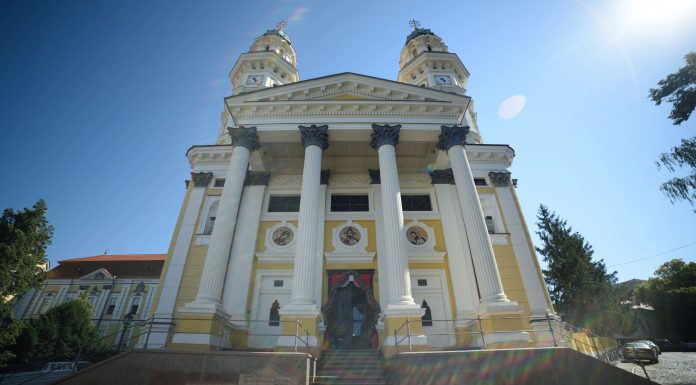
The interior of the cathedral is decorated in rococo style. The painting inside the cathedral was done at the beginning of the 20th century by artist Joseph Bokshay in late Baroque style. Some fragments of a XVIII century authentic painting are still preserved.
The cathedral’s facade is dominated by a four-columned portico of Corinthian order, as well as two bell...
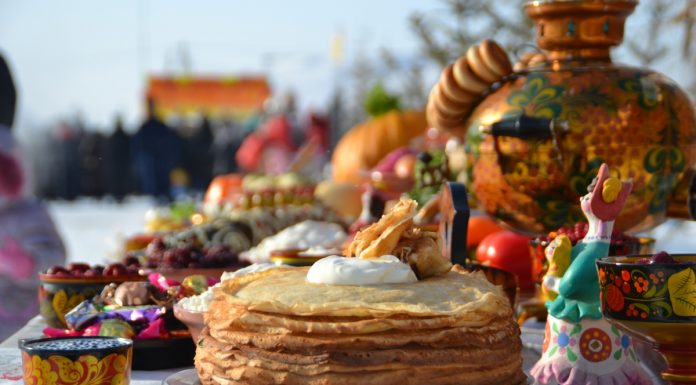
This is a gastronomic festival with a variety of cultural and entertainment programs that combines Transcarpathian and Ukrainian traditions with modern trends. The name of the festival - "Palachinta" – comes from the Hungarian «Palacsinta», which in Transcarpathian dialect means "pancake".
The festival program includes:
* folk festivities, concert programs, fun entertainment and contests
*surprises for children
* prizes for the brave who...

It is situated on the left bank of the city (New Town), the first written record of which dates from 1631. This part of the city was slowly developed, as constantly was suffering from floods. The regulation of the river Uzh banks began just in 18 century. Today this part of the embankment has the name of Orthodox, dedicated...
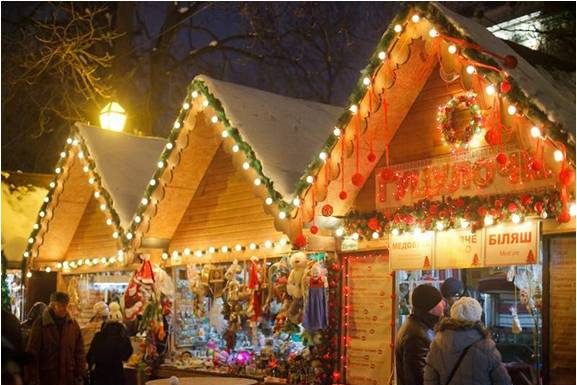
During the Christmas Fair, it is possible to buy souvenirs and products from local craftsmen. Wooden houses are set up in the centre of the town and decorated in Christmas style. Near these stalls one can see bundles of straw: a symbol of the manger where Christ was born. All of this creates a magical holiday atmosphere.
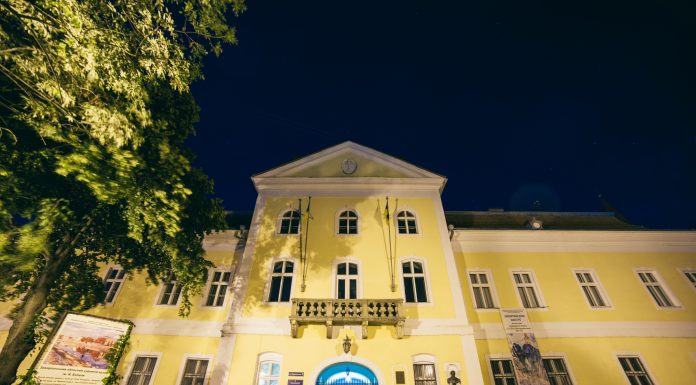
The Joseph Bokshay Transcarpathian Regional Art Museum is one of the centers of culture and art in the Transcarpathian region. It is named after the Ukrainian painter Joseph Bokshay. The origins of the museum date back to June 1945, when the former Zemska art gallery’s exhibit was given several rooms in Uzhgorod castle. For years, the museum’s collection was...
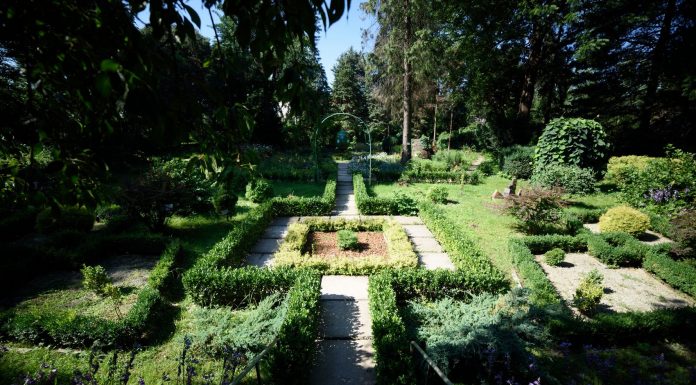
Uzhgorod Rock garden is a small analogue of Volodymyrska Hill in Kiev. It is covered with remnants of natural of volcanic rocks. The monument dedicated to painters Bokshay and Erdeli who were founders of Transcarpathian School of Art is situated there. A monument was installed in 1999 in honor of the City Day – 1106 years. An artificial yellow...